


Overview
Feeling better isn't complicated — it's consistent. Small, daily choices in how you move, eat, sleep and recover add up to a version of you with more energy, less pain, and more control over how you feel every day. That's what whole-person health means: not one fix, but every part of your health working together.
Logan University is teaming up with FOX 2 to bring you the kind of practical, real-world guidance that can help you live a healthier life. This directory holds all 40 of those Healthy Hints, organized by what you're actually trying to do, so you can find what your body needs right now and start today.
Browse by goal
Move & Strengthen
Showing 12 hints

ChiropracticMove & Strengthen
Sit with your spine supported
Keep both feet flat on the floor, knees at 90°, and your lower back lightly supported. Avoid slouching or craning your neck toward a screen.
Explore the Doctor of Chiropractic →Chiropractic insight
Poor sitting posture is one of the leading contributors to cervical and lumbar strain. Spinal adjustments help restore alignment when sitting habits have taken their toll.

ChiropracticMove & Strengthen
Move every 30–45 minutes
Prolonged sitting compresses spinal discs. Stand up, stretch, or take a short walk regularly throughout your day to keep your joints mobile and muscles active.
Explore the Doctor of Chiropractic →Chiropractic insight
Motion is lotion for your spine. Chiropractors often prescribe movement breaks as part of a care plan to maintain the benefits of spinal adjustments.

ChiropracticMove & Strengthen
Stretch your hips and hamstrings daily
Tight hips and hamstrings pull the pelvis out of alignment and increase lower back strain. Spend 5–10 minutes daily on targeted stretches to keep your foundation flexible.
Explore the Doctor of Chiropractic →Chiropractic insight
Chiropractors assess the whole kinetic chain — not just the site of pain. Tight hips often show up as low back complaints.

ChiropracticMove & Strengthen
Raise your phone to eye level
Looking down at a phone tilts your head forward, placing up to 60 lbs of force on your cervical spine. Bring your screen to eye level to protect your neck.
Explore the Doctor of Chiropractic →Chiropractic insight
'Tech neck' is a growing source of cervical spine dysfunction. Adjustments and soft-tissue therapy can relieve the chronic tension that builds from this habit.

ChiropracticMove & Strengthen
Strengthen your core
Your core — not your back — is your spine's primary support system. Planks, bird-dogs, and dead bugs build deep stabilizing muscles without stressing the lumbar spine.
Explore the Doctor of Chiropractic →Chiropractic insight
A strong core means adjustments hold longer. Chiropractors often incorporate corrective exercises to make structural changes last.

Physician AssistantMove & Strengthen
Get 150 minutes of moderate activity weekly
The CDC and AHA recommend at least 150 minutes of moderate aerobic activity per week — about 30 minutes, five days. Brisk walking counts. The key is consistency over intensity.
Explore PA programs →PA insight
Exercise is the closest thing to a miracle drug that medicine has. It lowers blood pressure, improves insulin sensitivity, reduces anxiety, and extends life.

Strength & ConditioningMove & Strengthen
Lift weights — at every age
Resistance training builds muscle, strengthens bone, improves insulin sensitivity, and protects against the loss of strength and independence that accelerates after age 40.
Explore the MS in Strength & Conditioning →S&C insight
Muscle is metabolically expensive tissue — the more you carry, the higher your resting calorie burn and the better your glucose regulation. Two sessions per week is the minimum effective dose.

Strength & ConditioningMove & Strengthen
Master the fundamental movement patterns
Every human body is designed to squat, hinge, push, pull, carry, and rotate. Training these six patterns builds functional strength that transfers to real life and reduces injury risk significantly.
Explore the MS in Strength & Conditioning →S&C insight
Most injuries happen not from training too hard, but from patterns that are underdeveloped or imbalanced. A body that moves well in all six patterns is resilient.

Strength & ConditioningMove & Strengthen
Train your cardiovascular system, too
VO2 max — your cardiorespiratory fitness level — is one of the strongest predictors of longevity. Zone 2 cardio at a conversational pace for 30–45 minutes trains the aerobic base that supports everything from daily energy to disease prevention.
Explore the MS in Strength & Conditioning →S&C insight
Strength and cardio are not in competition. Think of aerobic training as building the engine; strength training as building the chassis.

Strength & ConditioningMove & Strengthen
Warm up with intention, not habit
A proper warm-up raises core temperature, activates stabilizing muscles, and primes the nervous system. Five minutes of dynamic movement before training meaningfully reduces injury risk and improves performance.
Explore the MS in Strength & Conditioning →S&C insight
Static stretching before training temporarily reduces force production. Save it for after your session. Before training, move dynamically — leg swings, hip circles, light activation work.

Strength & ConditioningMove & Strengthen
Prioritize mobility alongside strength
Strength without mobility is like horsepower without steering. A joint that can't move through its full range under load is a joint waiting to be injured. Hips, thoracic spine, ankles, and shoulders all need dedicated work.
Explore the MS in Strength & Conditioning →S&C insight
Most people start caring about mobility after an injury. Spending 10 minutes daily on targeted joint mobility — not generic stretching — is one of the highest-return investments a physically active person can make.

Strength & ConditioningMove & Strengthen
Get a movement assessment before you train hard
Most people begin training without knowing how they move. A qualified S&C specialist can identify asymmetries, compensations, and mobility restrictions before they become injuries.
Explore the MS in Strength & Conditioning →S&C insight
Generic programs work for generic goals. A certified S&C specialist brings evidence-based periodization and biomechanical knowledge that no app or YouTube channel can replicate.
Eat Well
Showing 14 hints

ChiropracticEat Well
Stay well hydrated
Spinal discs are largely water — dehydration causes them to lose height and shock-absorbing ability. Aim for at least half your body weight in ounces of water daily.
Explore the Doctor of Chiropractic →Chiropractic insight
Disc health depends on hydration. Proper water intake supports the effects of spinal decompression and manipulation.

ChiropracticEat Well
Reduce inflammatory foods
Processed foods, added sugars, and trans fats fuel systemic inflammation that can worsen joint and disc pain. A diet rich in omega-3s, colorful vegetables, and whole grains supports musculoskeletal health.
Explore the Doctor of Chiropractic →Chiropractic insight
Inflammation is the body's response to injury — but chronic inflammation slows healing. Many chiropractors offer nutritional guidance as part of whole-person care.

Physician AssistantEat Well
Fill half your plate with vegetables and fruit
You don't need a perfect diet — you need a consistent one. Prioritizing fiber-rich produce crowds out ultra-processed foods, lowers cardiovascular risk, and supports gut microbiome health.
Explore PA programs →PA insight
Diet is one of the most powerful medications we have — and one of the hardest to prescribe. We'd rather talk food with you than add another pill to your regimen.

Physician AssistantEat Well
Limit alcohol to moderate levels
Current evidence links alcohol consumption — even moderate amounts — to increased risks for liver disease, certain cancers, and cardiovascular issues. The lowest-risk level is less than you might think.
Explore PA programs →PA insight
Alcohol is one of the most normalized risk factors in our culture, and one of the most impactful on long-term health outcomes. Honest conversation with your PA makes a difference.

NutritionEat Well
Eat at consistent times each day
Your body runs on a circadian rhythm that governs digestion, hormone release, and metabolism. Eating at regular intervals supports blood sugar stability and reduces the urge to overeat later.
MS Nutrition & Human Performance →Nutritionist insight
Skipping meals — especially breakfast — often backfires. It raises cortisol, increases hunger hormones, and leads to less mindful choices at the next meal.
NutritionEat Well
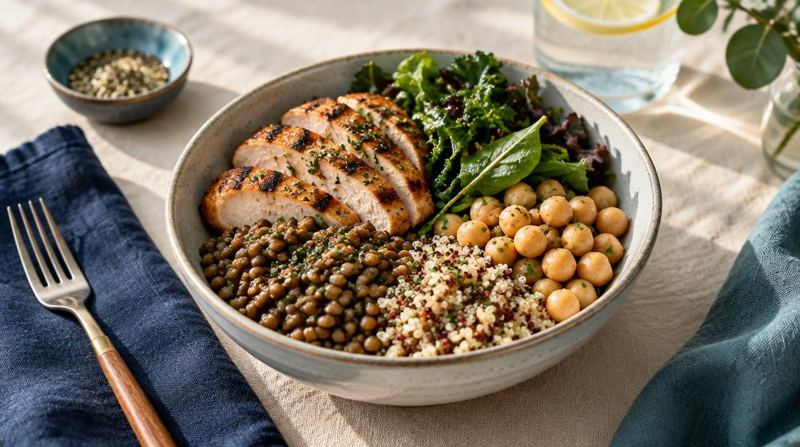
Build meals around protein and fiber
Protein and fiber are the two most satiating nutrients. Anchoring every meal with a quality protein source and a fiber-rich vegetable or grain slows digestion, steadies energy, and reduces cravings.
MS Nutrition & Human Performance →Nutritionist insight
Most people significantly undereat both. Aim for 25–35g of fiber and 0.7–1g of protein per pound of body weight daily — achievable with intentional food choices.

NutritionEat Well
Eat a wide variety of plants
People who eat 30 or more different plant foods per week have a more diverse gut microbiome — linked to better immunity, mood, and metabolic health. Variety matters as much as volume.
MS Nutrition & Human Performance →Nutritionist insight
Herbs, spices, nuts, seeds, and legumes all count. You don't need to overhaul your diet — just add one new plant food per week and rotate what you already eat.

NutritionEat Well
Include fermented foods regularly
Yogurt, kefir, kimchi, sauerkraut, miso, and kombucha contain live cultures that support a healthy gut microbiome. Even small daily servings can meaningfully improve microbial diversity.
MS Nutrition & Human Performance →Nutritionist insight
Roughly 90% of your serotonin is produced in the gut. Supporting microbial health through fermented foods has implications well beyond digestion, including mood and immune resilience.

NutritionEat Well
Drink water before you feel thirsty
Thirst is a late signal — by the time you feel it, you may already be mildly dehydrated. Even 1–2% dehydration impairs concentration, energy, and physical performance.
MS Nutrition & Human Performance →Nutritionist insight
Hunger and thirst signals overlap more than most people realize. Before reaching for a snack, drink 8 oz of water and wait 10 minutes.

NutritionEat Well
Watch what you drink, not just what you eat
Sugary beverages are among the most significant sources of excess calories in the American diet. Liquid calories don't trigger the same fullness signals as solid food.
MS Nutrition & Human Performance →Nutritionist insight
Swapping one sweetened drink per day for water or unsweetened tea can reduce annual sugar intake by 10–15 lbs. It's one of the highest-return changes a client can make.

NutritionEat Well
Eat without screens
Distracted eating bypasses the brain's satiety signals. People consistently eat more — and enjoy it less — when eating in front of a screen.
MS Nutrition & Human Performance →Nutritionist insight
This is one of the most underrated and most resisted pieces of advice I give. Even one screen-free meal per day can shift how clients relate to food.

NutritionEat Well
Slow down and chew thoroughly
Digestion begins in the mouth. Chewing thoroughly improves nutrient absorption and gives the gut-brain axis the 15–20 minutes it needs to communicate fullness.
MS Nutrition & Human Performance →Nutritionist insight
Speed eating is one of the most common patterns I see in clients who struggle with overeating. It's not a willpower problem — it's a timing problem.

NutritionEat Well
Read ingredient lists, not just nutrition labels
A product can look healthy on its nutrition label while containing a long list of additives and hidden sugars. The ingredient list tells you what's actually in the food.
MS Nutrition & Human Performance →Nutritionist insight
Ultra-processed foods are engineered to override your satiety signals. Understanding ingredient lists is one of the most empowering skills a client can develop.

NutritionEat Well
Work with a nutritionist — not just the internet
Nutrition is one of the most conflicted fields online. A qualified nutritionist can cut through the noise and build a plan that fits your biology, culture, schedule, and goals.
MS Nutrition & Human Performance →Nutritionist insight
There is no universal diet. Personalized guidance gets results that generic advice simply can't — and it often takes less time than you'd think.
Recover & Recharge
Showing 8 hints

ChiropracticRecover & Recharge
Sleep in a spine-friendly position
Side sleeping with a pillow between your knees or back sleeping with a pillow under your knees reduces spinal stress. Avoid sleeping on your stomach if possible.
Explore the Doctor of Chiropractic →Chiropractic insight
Your spine heals during sleep. Consistent misalignment during rest can undo progress made through treatment — a chiropractor can recommend the right pillow height for your neck.

ChiropracticRecover & Recharge
Manage stress actively
Chronic stress triggers muscle tension — especially in the neck, shoulders, and upper back. Deep breathing, mindfulness, and regular physical activity are evidence-based ways to lower your tension load.
Explore the Doctor of Chiropractic →Chiropractic insight
The nervous system is chiropractic's domain. Spinal adjustments may help regulate the autonomic nervous system's stress response, complementing other stress management strategies.

Physician AssistantRecover & Recharge
Prioritize 7–9 hours of sleep
Chronic sleep deprivation raises cortisol, impairs immune function, increases cardiovascular risk, and worsens mental health. Sleep is not optional recovery — it's active biological maintenance.
Explore PA programs →PA insight
Sleep is consistently underestimated as a health factor. If you're sleeping less than 7 hours regularly, it's affecting nearly every system in your body.

Physician AssistantRecover & Recharge
Talk to your provider about mental health
Depression and anxiety are among the most common conditions we treat — and among the most undertreated. Your mental health is medical. You don't need to be in crisis to ask for help.
Explore PA programs →PA insight
PAs are trained to screen, diagnose, and manage mental health conditions, and to connect you with the right support when we can't do it alone.

Strength & ConditioningRecover & Recharge
Rest is when you actually get stronger
Training creates the stimulus. Recovery creates the adaptation. Muscle is developed during sleep and rest — not during the workout itself. Skipping rest days stalls progress and increases injury risk.
Explore the MS in Strength & Conditioning →S&C insight
The athletes who make the fastest progress are almost never the ones training the most — they're the ones recovering the best. Sleep, nutrition, and stress management are training variables.

Strength & ConditioningRecover & Recharge
Use active recovery on your off days
Light walking, swimming, mobility work, or gentle yoga on recovery days increases blood flow to fatigued tissue, reduces soreness, and maintains the movement habit without adding training stress.
Explore the MS in Strength & Conditioning →S&C insight
The binary of 'train hard or do nothing' is a beginner's framework. Low-intensity movement on off days accelerates recovery and keeps the body primed for the next hard session.

Strength & ConditioningRecover & Recharge
Progress, not perfection
Missing one workout doesn't derail progress — missing six weeks does. A consistent 80% effort sustained over years will always outperform sporadic 100% efforts followed by long breaks.
Explore the MS in Strength & Conditioning →S&C insight
The clients who reach their goals are rarely the most motivated on day one — they're the most consistent over time. We design programs around your real life, not an idealized version of it.

Strength & ConditioningRecover & Recharge
Train for longevity, not just appearance
Appearance-based goals get people started. Longevity-based goals keep them going. Training to stay strong and mobile at 70, 80, and 90 changes how you exercise — and makes it something you can sustain for life.
Explore the MS in Strength & Conditioning →S&C insight
The question I ask every new client is: what do you want to be able to do at 80? Deadlifts aren't just for athletes — they're for anyone who wants to get off the floor without help for the rest of their life.
Prevent & Protect
Showing 6 hints

ChiropracticPrevent & Protect
Don't wait for pain to seek care
Spinal misalignments often develop silently. Routine chiropractic visits can identify and correct these issues before they become painful, just as regular dental checkups prevent bigger problems.
Explore the Doctor of Chiropractic →Chiropractic insight
Preventive care is more effective and less costly than reactive treatment. Many patients who begin care for pain choose to continue for wellness — and notice the difference.

Physician AssistantPrevent & Protect
Stay current on vaccinations
Vaccines aren't just for children. Adults need boosters for tetanus, flu, shingles, pneumonia, and COVID-19 depending on age and health history. Check in with your provider annually.
Explore PA programs →PA insight
Vaccine-preventable illness is one of the most frustrating things we see in clinic — because it's avoidable. A quick review at your annual visit takes minutes and can protect years of your health.

Physician AssistantPrevent & Protect
Know your numbers
Blood pressure, cholesterol, blood sugar, and BMI are your personal early-warning system. Many people have dangerously elevated levels with zero symptoms. Get them checked at least once a year.
Explore PA programs →PA insight
Hypertension is called 'the silent killer' because it rarely hurts — until it causes a stroke or heart attack. We can treat what we catch early.

Physician AssistantPrevent & Protect
Wear sunscreen year-round
Skin cancer is the most common cancer in the United States — and one of the most preventable. SPF 30+ applied daily, even on cloudy days, significantly reduces your lifetime risk.
Explore PA programs →PA insight
We perform skin checks in clinic and see things patients never would on their own. Annual checks catch melanoma at its most treatable stage.

Physician AssistantPrevent & Protect
Don't skip recommended screenings
Colonoscopies, mammograms, Pap smears, lung CT scans, and cholesterol panels exist because catching disease early — before symptoms — saves lives. Follow the schedule your provider recommends.
Explore PA programs →PA insight
Stage 1 colon cancer has a 90%+ survival rate. Stage 4 does not. Screening is uncomfortable for a day; missing it can cost years.

Physician AssistantPrevent & Protect
Build a relationship with a primary care provider
A provider who knows your history, your family, and your habits is your greatest health asset. Continuity of care leads to better outcomes, fewer ER visits, and earlier detection of chronic disease.
Explore PA programs →PA insight
PAs provide the same comprehensive care as physicians — and we're often more accessible. Establishing care before you're sick is one of the best decisions you can make.
Healthy Hints on FOX 2
Logan experts share Healthy Hints on FOX 2 (KTVI), St. Louis on these dates.
- Segment 1
Wednesday, October 7, 2026
- Segment 2
Wednesday, October 14, 2026
- Segment 3
Wednesday, November 11, 2026
- Segment 4
Wednesday, November 18, 2026
- Segment 5
Wednesday, December 2, 2026
- Segment 6
Wednesday, December 9, 2026
Logan Programs
- ChiropracticThis is a preview of a chiropractic education.Explore the Doctor of Chiropractic →
- Physician AssistantScreenings and prevention like this are daily work for a Physician Assistant.Explore PA programs →
- NutritionHave you ever thought about getting your master's in nutrition?MS Nutrition & Human Performance →MS Applied Nutrition & Dietetics →
- Strength & ConditioningThis is what our Strength & Conditioning graduates do for a living.Explore the MS in Strength & Conditioning →
Learn From Experts. Get Care From Experts.
The clinicians who teach these hints also see patients at Logan health centers across the St. Louis metro, with students learning alongside them.
Find a Logan Health CenterHealthy Hints is a partnership between Logan University and FOX 2 (KTVI), St. Louis.
These hints are general wellness information from Logan University faculty. They are not medical advice and do not create a provider-patient relationship. Talk to a licensed clinician about your own health, and call 911 in an emergency.