


Completion of Bachelor’s Degree
Start your journey with a strong foundation! All applicants must complete a bachelor’s degree from a U.S. accredited institution by September 1 before starting the program.
Foreign medical graduates with U.S. citizenship or Permanent Resident status are welcome to apply. We typically require at least one full year of science coursework completed at a U.S. institution within the last two years.
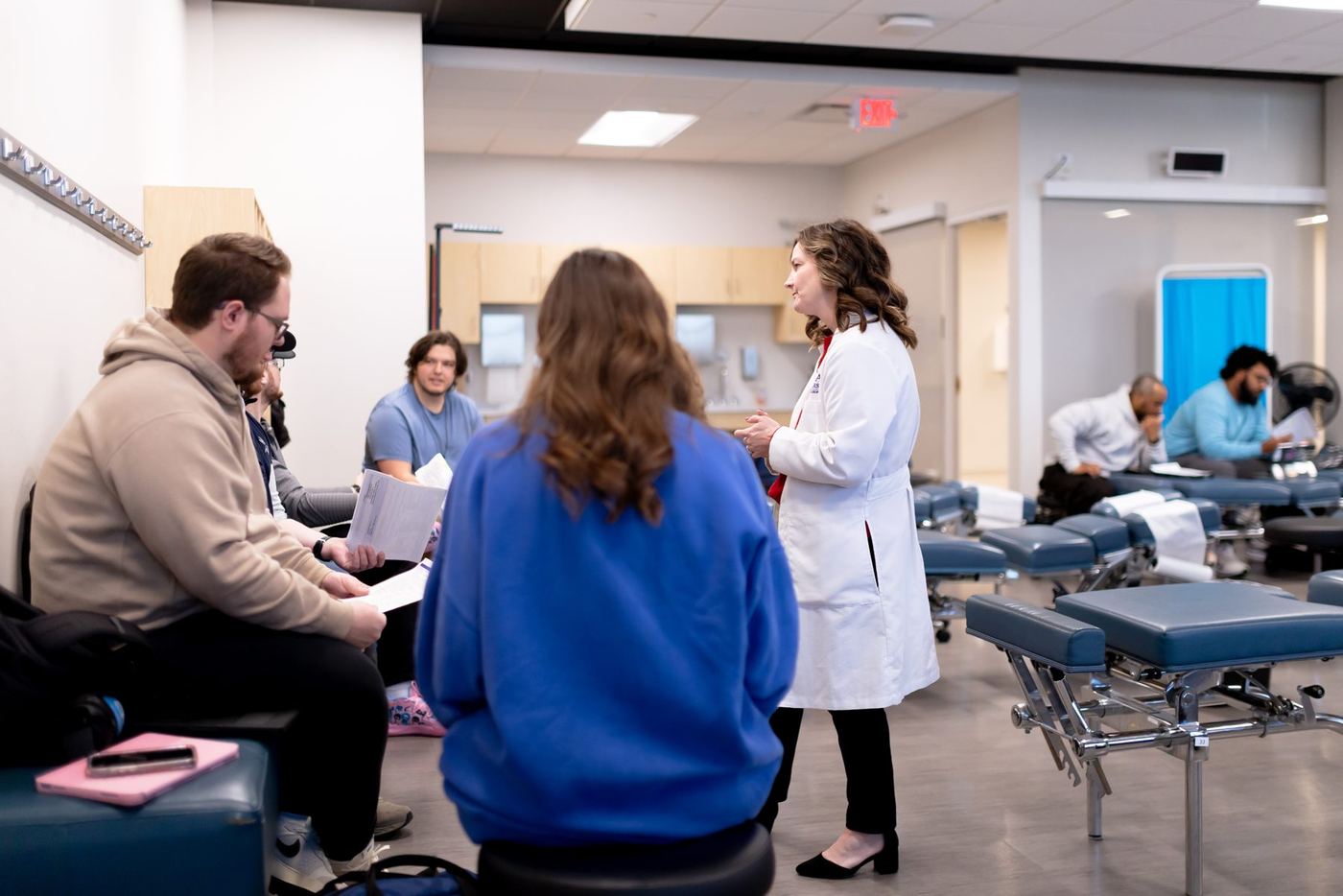
Prerequisite Course Requirements
Ready to build your medical knowledge? Here are the courses you need to get started.
Prerequisite Coursework:
- General Chemistry I with lab
- Organic Chemistry I with lab
- General Biology I with lab
- Basic Human Anatomy with lab (100-200 level)*
- Basic Human Physiology (100-200 level)*
- Microbiology with lab
- Psychology
- Medical Terminology
*Combined A&P 1 and 2 series (with labs) satisfy both anatomy and physiology requirements.
Recommended Coursework:
- Upper-level human sciences (Pathophysiology, Genetics, Pharmacology, etc. – Grade B or higher required)
- Statistics
- Physics
- Pharmacology
Important Notes:
- Complete all prerequisites within 10 years (sciences within 5 years preferred).
- Earn a grade of “C” or better in every prerequisite.
- Apply with no more than two outstanding prerequisites.
- Finish all coursework by September 1 and submit official transcripts by November 1.
- Graded options only; pass/fail credits are not accepted.
Minimum Cumulative GPA
We value your academic dedication. To apply, you need a minimum cumulative GPA of 3.00 on a 4.00 scale.
Logan University calculates this GPA using every collegiate course you've ever taken. While 3.00 is the minimum, we prioritize applicants with a GPA above 3.20 to ensure you're ready for our rigorous curriculum.
Minimum Prerequisite GPA
Your performance in core sciences matters. You must hold a prerequisite GPA of 3.00 or higher.
All prerequisite courses must be completed within 10 years of your application date. Aim for a 3.2 or higher to stand out in our competitive selection process! If you have questions, reach out to us at pa-admissions@logan.edu.

Direct Patient Care Experience
Bring your hands-on experience to Logan! You need a minimum of 500 hours of direct patient health care experience to apply.
Common Examples:
- CNA, MA, RN, EMT, Paramedic, Phlebotomist, or Athletic Trainer.
- Military corpsman or medical scribe roles.
- Paid employment or research experience.
We value depth in clinical practice, so applicants with over 500 hours or professional certifications (like BSN or EMT) receive increased consideration. Note: Hours earned for student credit do not count toward the minimum. Questions? Email pa-admissions@logan.edu.
Three Letters of Recommendation
Who can speak to your potential? Submit three letters that highlight your ability to thrive in a fast-paced medical environment.
Required References:
- One academic reference (professor, advisor, or collegiate coach).
- One recommended medical reference (PA, MD, DO, or NP) who supervised your clinical work.
- Please avoid using family members or friends for these recommendations.
The Test of English as a Foreign Language (TOEFL) Non-Native English Speakers
An international student seeking admission to Logan University must provide the following documentation in addition to all other admissions requirements:
- Documentation of English proficiency is required of all international applicants unless the applicant has earned a degree from an accredited University in any country whose primary national language is English. Accepted forms of documentation include: Successful completion of a prior degree at the baccalaureate level or higher delivered and assessed in English (either in the United States or as determined by U.S. equivalencies); or Test of English as a Foreign Language (TOEFL) score; or Overall TOEFL score of 79 or higher on the iBT Test (sub- scores: Writing 18, Listening 21, Reading 21, and Speaking 19) on exams taken prior to January 2026. Overall TOEFL score of 4.5 for exam taken in or after January 2026. International English Language Testing System; or Score of 6.5 or higher Duolingo Test Score of 110 or higher
- Transcript Evaluation for Admissions When applying for a degree program, applicants with degrees earned outside the U.S. must complete all of the admission standards outlined for the degree program in which the student is applying; additionally transcripts from the degree(s) earned must be evaluated for U.S. equivalence by an international evaluator whom is a current member of the National Association of Credential Evaluation Services (NACES), and an official copy of the evaluation must be sent from the service directly to Logan University. Logan University does not require third party transcript evaluations for admissions for students transferring from Canadian providences where English is the major language. However, all international transcripts (including those from Canada) must be evaluated by a member of NACES if a student wishes to be considered for transfer credit. In the event the program for which the student is applying has specific course pre-requisites, the evaluation must include a course-by-course evaluation. Only those science courses that are specifically identified as laboratory courses in some way in the course-by-course evaluation may be counted toward science laboratory pre-requisite requirements. Applications will not be complete and cannot be verified until the official documents are received by the evaluating organization.
For questions about Logan’s international applicant policy, contact:pa-admissions@logan.edu

Admission and Enrollment Practices that Favor Specified Individuals or Groups
Logan University is proud to support students from all backgrounds. We provide special consideration to:
- U.S. Veterans
- Logan University Graduates
- Applicants from low socioeconomic backgrounds
- Applicants from educationally disadvantaged areas (rural or inner-city)
Physician Assistant Interview Process
We want to get to know you! Our interview process is designed to be welcoming and informative.
Your Interview Day Includes:
- Program Information Session
- Multi-modal Activities
- Faculty Interview Sessions
- Campus Tour
- Financial Aid Briefing
Interview Day FAQ
Is there a deadline for accepting the invitation to interview?
What if I need to cancel or reschedule my interview?
Is the interview in person, virtual or hybrid?
How long should I plan to be available on interview day?
Will there be breaks during the interview day?
Will I have the opportunity to ask questions?
How should I prepare for the interview?
What should I wear?
Are there prohibited items or behaviors during the interview?
What is the school's policy on recording interviews?
Post-Interview Selection Process
We review applications and conduct interviews on a rolling basis. You can expect admission decisions and notifications by August.
Once class capacity is reached, we maintain a ranked Alternate List. If a spot opens up before classes begin in January, the committee selects the top-ranked candidate to join the cohort. Stay focused on your goals—we're excited to see your progress!
Introduction
Logan University is dedicated to cultivating highly proficient and empathetic Physician Assistants (PAs). Enrollment in our program presupposes a requisite level of cognitive and technical proficiency. Successful mastery of the program’s competencies culminates in the attainment of a Master of Medical Science, Physician Assistant degree.
The PA Program is committed to identifying candidates and students who are best positioned to address societal needs and graduate as adept and capable PAs. Technical standards are used to assess the nonacademic qualifications of applicants and matriculating students. In conjunction with the academic standards, the following technical standards are requirements for admission, promotion, and graduation.
For admission, the program will consider applicants who demonstrate the ability to acquire the knowledge necessary for the practice of medicine, as well as the ability to perform skills as described in this document. Evaluation of candidates/students encompasses not only academic achievements but also an assessment of their physical and emotional aptitude to fulfill the comprehensive requirements of the program’s curriculum and emerge as proficient clinicians.
PA candidates and students must meet all technical standards upon admission and throughout the program. These standards ensure that all students can fully engage in the educational process and provide safe, effective patient care. Logan University and the PA program are committed to student success and patient safety, recognizing that these requirements may be met with or without reasonable accommodations.
The use of intermediaries (such as personal aids, assistants, caregivers, readers, or interpreters) is deemed unacceptable due to concerns regarding patient privacy, independent task completion, and direct patient interaction, particularly during clinical training. This requirement ensures that PA students can independently perform essential functions, preserving the integrity of patient care and the educational process.
Technical Standards
Candidates and students must demonstrate fundamental cognitive, physical, and professional capabilities essential for PA practice. The intellectual demands require the ability to effectively learn, analyze, and integrate complex medical information while applying critical thinking to clinical problem-solving. Students must process and synthesize multiple sources of information simultaneously to support sound clinical decisions. Physical and motor skills must be sufficient to safely perform patient care activities and clinical procedures while maintaining the stamina required for extended clinical and academic work.
Professional competence requires the ability to build and maintain therapeutic relationships with patients while working collaboratively within healthcare teams. Students must consistently demonstrate empathy, sensitivity, and mature judgment in patient interactions. The demanding nature of PA education and practice requires effective stress management skills, including the ability to function under time pressure and in high-stress environments while maintaining performance quality during long academic and clinical days. Students must adapt readily to rapidly changing situations and environments.
Clinical decision-making abilities must encompass appropriate application of medical knowledge to patient care, accurate interpretation of clinical information, and sound judgment across various medical settings and situations. Students must recognize their limitations and seek appropriate assistance when needed. These integrated capabilities ensure that candidates can fulfill the rigorous demands of PA education and provide safe, effective patient care. While these standards are essential requirements for program completion and clinical practice, students may achieve them with or without reasonable accommodations.
Principles
- Observation : Students must have the functional ability to observe demonstrations and experiments in the basic sciences and must have sufficient use of the senses necessary to perform a physical examination.
- Communication : Students must be able to relate reasonably to patients and establish sensitive, professional relationships with patients, colleagues, and staff. They are expected to communicate the results of the history and examination to the patient and to their colleagues with accuracy, clarity, and efficiency.
- Motor : Students are required to possess sensory and motor skills sufficient to independently elicit information from patients using palpation, auscultation, percussion and other manually based diagnostic maneuvers. Students should be able to conduct laboratory tests and carry out diagnostic and therapeutic procedures. Students should possess and execute appropriate motor movements to provide basic medical care in a general medical environment and coordinate fine and gross muscular movements to treat patients in emergency situations. Students must be able to move about freely in patient care environments and must be able to move between settings such as clinics, classroom buildings, and hospitals. Physical stamina sufficient to complete the rigorous course of didactic and clinical study is required. This includes, but is not limited to, long periods of sitting, standing, or moving which are required in a variety of classroom, laboratory, and clinical experiences.
- Intellectual, Conceptual, Integrative, and Quantitative Abilities: Students must be able to learn to analyze, synthesize, solve problems, and reach reasonable diagnostic and therapeutic judgments. Students are expected to be able to display good judgment in the assessment and treatment of patients. They must be able to learn to respond with prompt and appropriate action in emergency situations.
- Behavioral and Social Attributes: Students are expected to accept feedback constructively and make appropriate adjustments to their behavior. They must also demonstrate perseverance, diligence, and consistency to successfully complete the PA program and transition into professional practice within a reasonable timeframe. Additionally, they must uphold professional and ethical conduct in all interactions with peers, faculty, staff, and patients. Students are expected to accept criticism and respond with appropriate modification of their behavior.
- Ethical and Cultural Competency: Students must be able to communicate with and care for all patients, including persons whose culture, sexual orientation, or religious beliefs are different from their own. They must be able to perform a complete history and physical exam on any patient regardless of the student’s and patient’s race, religion, ethnicity, socioeconomic status, gender, age, or sexual preference. Similarly, students must be able to interact professionally with colleagues and other healthcare professionals without regard to race, religion, ethnicity, socioeconomic status, gender, age, or sexual preference.
Substance Use / Abuse
Candidates and students must not engage in substance abuse or be dependent on alcohol, controlled substances, or other mind-altering drugs. They must refrain from using any substances, whether legal or illegal, that could impair their clinical judgment, response time, cognitive function, or decision-making abilities. This requirement ensures patient safety and maintains the high standards of professional practice expected in healthcare settings.
Requests for Reasonable Accommodations
Logan University recognizes its responsibility to provide equal access opportunities for persons with disabilities, under section 504 of the Rehabilitation act of 1973 and Title II of the Americans with Disabilities act of 1990 as amended (2008). The staff and faculty work together to ensure students with disabilities have equal access to educational experiences. Logan makes reasonable academic adjustments for qualified individuals with disabilities, as required by law. Any qualified applicant or student with a disability may request a reasonable academic adjustment in order to perform the academic and technical standards requisite to admissions and/or participation in the educational program and activities. Logan University adheres to our obligations for reasonable accommodations while maintaining the essential functions required for safe and effective clinical practice.
A requested accommodation will not be granted where the accommodation requires a fundamental alteration of the program requirements. Some accommodations that are appropriate for academic work may not be appropriate in assessing clinical competency requirements. For example, extended time on a written exam may be an appropriate reasonable accommodation, but allowing extended time in the performance of time-sensitive clinical competencies may be a fundamental alteration of program requirements, and therefore not a reasonable accommodation. Certain time-critical skills, including but not limited to, the performance of CPR and emergency response, are essential functions in the PA role and must meet the same standards required in patient care settings. An accommodation that would change the standards applied to these time-critical skills may be a fundamental alteration of the PA program requirements.
The initial step in requesting accommodations is to complete the Disability Notification and Accommodation Request Form. It is the responsibility of individuals with disabilities to inform Logan of their needs, and to provide documentation of the disability such that we may engage in an interactive process regarding each student’s request.
Cost of Attendance – Resident and Non-resident
| Fee | Year 1 | Year 2 | Total |
|---|---|---|---|
| Tuition | $58,000 | $57,000 | $115,000 |
| Program Fees | |||
| AAPA / MOAPA Membership | $75 / $50 | $125 | |
| BLS / ACLS | $65 | $250 | $315 |
| Background Check / Drug Screen | $80 | $30 | $110 |
| Course Fees | $2,725 | $2,725 | $4,450 |
| Medical Equipment & White Coat | $1,230 | $1,230 | |
| Total Tuition & Fees | $122,230 |
Additional Costs to Students — variable, and not paid to Logan.
| Cost | Year 1 | Year 2 | Total |
|---|---|---|---|
| SAAAPA Dues | $50 | $50 | |
| Student Activity Fee | $150 | $150 | $300 |
| Technology (laptops, iPads, etc.) | $2,250 varies | $2,250 | |
| Textbooks | $700 varies | $200 varies | $900 |
| Immunization as needed | $100 varies | $50 varies | $150 |
| Health Screening | $100 varies | $100 varies | $200 |
| Student Health & Disability Insurance | $1,200 varies | $1,200 varies | $2,400 |
| Living Expense Allowance | $19,500 varies | $19,500 varies | $39,000 |
| Transportation | $4,000 varies | $4,000 varies | $8,000 |
| Clinical Phase Additional Travel | $6,000 varies | $6,000 | |
| International Travel Rotation (optional) | $3,000 varies | $3,000 | |
| Loan Fees | $110 varies | $110 varies | $220 |
| Total Additional Costs (variable) | $28,160 | $34,310 | $62,470 |
| Yearly Totals | $90,385 | $94,315 | $184,700 |
Application Process
Key Dates
Applications for the January 2027 cohort have closed. Contact Admissions for the next cohort cycle dates.
Submission Portal
Submit all materials, including references and transcripts, through the Logan University Portal by the September deadline.
Cohort Size
Join a select group of 40 students matriculating each January to start your path toward excellence.
Admissions Requirements
- Complete a bachelor's degree from a U.S. accredited institution.
- Finish all eight prerequisite courses with a grade of C or better.
- Maintain a minimum cumulative GPA of 3.00.
- Document at least 500 hours of direct patient care experience.
- Submit three professional letters of recommendation.
- Provide proof of English proficiency if you are a non-native speaker.
Student Selection
- Demonstrate academic potential through strong GPA and rigorous science coursework.
- Show a deep commitment to the PA role and service to others.
- Exhibit maturity, strong interpersonal skills, and professional motivation.
- Highlight diverse life experiences and clinical background.
- Maintain U.S. citizenship or lawful permanent residency status.
- Excel in faculty interviews and multi-modal application activities.
Advanced Placement Policy
Logan University provides a unified educational experience for all students. We do not offer advanced placement within the Physician Assistant program.
Logan University PA Program Technical Standards
- Observe demonstrations and physical examinations using functional senses.
- Communicate clearly and efficiently with patients, staff, and colleagues.
- Execute motor movements necessary for diagnostic maneuvers and emergency care.
- Analyze and synthesize complex information to reach sound clinical judgments.
- Uphold ethical conduct and cultural competency in all professional interactions.
- Manage high-stress environments with perseverance and professional diligence.
Tuition and Fees
$115,000
Total estimated program tuition
$122,230
Total tuition and mandatory fees
40
Students per annual cohort
A Mission-Driven Physician Assistant Program
The Logan University Physician Assistant Program is dedicated to educating students to become competent PAs who practice evidence-based medicine, exhibit cultural sensitivity, and deliver patient-centered care. We recruit compassionate individuals committed to providing whole-health care and increasing access for patients and their families.
Our program values reflect the Logan University core mission of excellence in health sciences, education, and service. As a student, you will join a diverse community that prioritizes empathy, character, and teamwork. By integrating these values into your training, you'll be prepared to meet the needs of society as a skilled and dedicated healthcare professional.
Accreditation – Provisional
Logan University has been granted Accreditation – Provisional from the Accreditation Review Commission on Education for the Physician Assistant (ARC-PA). This status indicates that the plans and resource allocation for the proposed program appear to demonstrate the program’s ability to meet the ARC-PA Standards. The Logan University Physician Assistant Program will matriculate its first class in January 2027. We are committed to maintaining a rigorous curriculum that meets all national standards for the PA profession.
The Didactic Phase: Building Foundations
The first 12 months of the Physician Assistant program focus on the core foundations of medical education. You will complete 71 credit hours of sequenced coursework across three trimesters, focusing on organ systems, behavioral health, and infectious disease. Courses include Clinically Oriented Anatomy, Patient Assessment, Pharmacology, and Clinical Reasoning. This rigorous didactic year provides the knowledge and skills necessary to transition successfully into clinical practice.
The Clinical Phase: Hands-On Practice
The second year of the Physician Assistant program consists of 12 months of clinical rotations and advanced coursework. You will complete nine Supervised Clinical Practice Experiences (SCPEs), consisting of seven core rotations and two electives. During the final trimester, you will undergo a 17-week intensive period that includes testing, board preparation, and program completion requirements to ensure you are ready for entry-level practice.
Core Clinical Rotations:
- Family Medicine
- Internal Medicine
- Surgery
- Emergency Medicine
- Pediatrics
- Women’s Health
- Behavioral Health
Logan University also offers an application-based international rotation as an elective option for students looking to expand their clinical horizons globally.
Didactic Year Course Sequence
| Trimester | Course Number | Course Title | Credit Hours |
|---|---|---|---|
| 1 | 511 | PA Professional Studies I | 1.5 |
| 1 | 521 | Diagnostic Medicine and Procedures I | 2.5 |
| 1 | 531 | Patient Assessment and Documentation I | 3 |
| 1 | 541 | Fundamentals of Clinical Practice I | 3 |
| 1 | 551 | Pharmacology and Pharmacotherapeutics I | 1.5 |
| 1 | 561 | Clinically Oriented Anatomy and Medical Sciences I | 3 |
| 1 | 571 | Clinical Reasoning I | 3 |
| 1 | 581 | Pathophysiology and Clinical Medicine I | 6.5 |
| 2 | 512 | PA Professional Studies II | 1.5 |
| 2 | 522 | Diagnostic Medicine and Procedures II | 2.5 |
| 2 | 532 | Patient Assessment and Documentation II | 3 |
| 2 | 542 | Fundamentals of Clinical Practice II | 3 |
| 2 | 552 | Pharmacology and Pharmacotherapeutics II | 1.5 |
| 2 | 562 | Clinically Oriented Anatomy and Medical Sciences II | 2.5 |
| 2 | 572 | Clinical Reasoning II | 3 |
| 2 | 582 | Pathophysiology and Clinical Medicine II | 6.5 |
| 3 | 513 | PA Professional Studies III | 1.5 |
| 3 | 523 | Diagnostic Medicine and Procedures III | 2.5 |
| 3 | 533 | Patient Assessment and Documentation III | 3 |
| 3 | 543 | Fundamentals of Clinical Practice III | 3 |
| 3 | 553 | Pharmacology and Pharmacotherapeutics III | 1.5 |
| 3 | 563 | Clinically Oriented Anatomy and Medical Sciences III | 2.5 |
| 3 | 573 | Clinical Reasoning III | 3 |
| 3 | 583 | Pathophysiology and Clinical Medicine III | 6.5 |
Visit Logan University
We invite you to experience our campus firsthand! Logan University offers Visit Days on the last Monday of each month for potential Physician Assistant applicants. These days allow you to tour our facilities and meet with members of the Logan community. While these visits are separate from official Interview Days, they are a fantastic way to see where you will be building your future in medicine.
Estimated Program Costs
Your education is an investment in a high-demand health profession. The Physician Assistant program tuition is $58,000 for the first year and $57,000 for the second year. Beyond tuition, mandatory fees include AAPA/MOAPA memberships, medical equipment, a white coat, and course-specific fees. We also provide estimates for indirect costs, such as housing, food, and transportation, to help you and your family create a sustainable budget for your two years at Logan University.
Measuring Success and Excellence
The Physician Assistant program is built on measurable outcomes to ensure you are ready for the clinic. We aim for our graduates to score at or above the national mean on the PANCE exam. Our curriculum focuses on five primary goals:
- Academic Success: Maintaining high graduation and PANCE pass rates.
- Evidence-Based Practice: Ensuring students integrate critical thinking and research into patient care.
- Clinical Competency: Delivering a comprehensive curriculum that prepares you for entry-level practice.
- Community Engagement: Encouraging participation in professional and community service.
- Cultural Sensitivity: Preparing graduates to deliver empathetic, patient-centered care to diverse populations.
Entry-Level Competencies
- Demonstrate clinical assessments including focused interviews and physical examinations.
- Evaluate diagnostic studies to support effective clinical decision-making.
- Provide patient education and counseling to encourage shared decision-making.
- Develop patient-centered management plans through the integration of evidence-based medicine.
- Collaborate effectively within interprofessional healthcare teams.
- Apply core medical, social, and behavioral science knowledge across the human life span.
Recognizing Academic Achievement
Logan University plans to establish a chapter of the Pi Alpha National Honor Society for Physician Assistants. This society recognizes students who demonstrate excellence in scholarship, service, and research. To be eligible, Physician Assistant students must maintain a minimum GPA of 3.5 and show a commitment to leadership and professional service. Induction into Pi Alpha is a prestigious honor that highlights your dedication to the highest standards of the PA profession.

Next step
Take the next step with Logan
Ready to take the next step at Logan University?
Visit
See the campus and health centers on a guided visit.
Talk to Admissions
Fifteen minutes with someone who knows your program.
Apply Online
Start your application — no fee, save and return anytime.